Thursday, August 12, 2010

A Walk Along The South Coast Boardwalk In Barbados


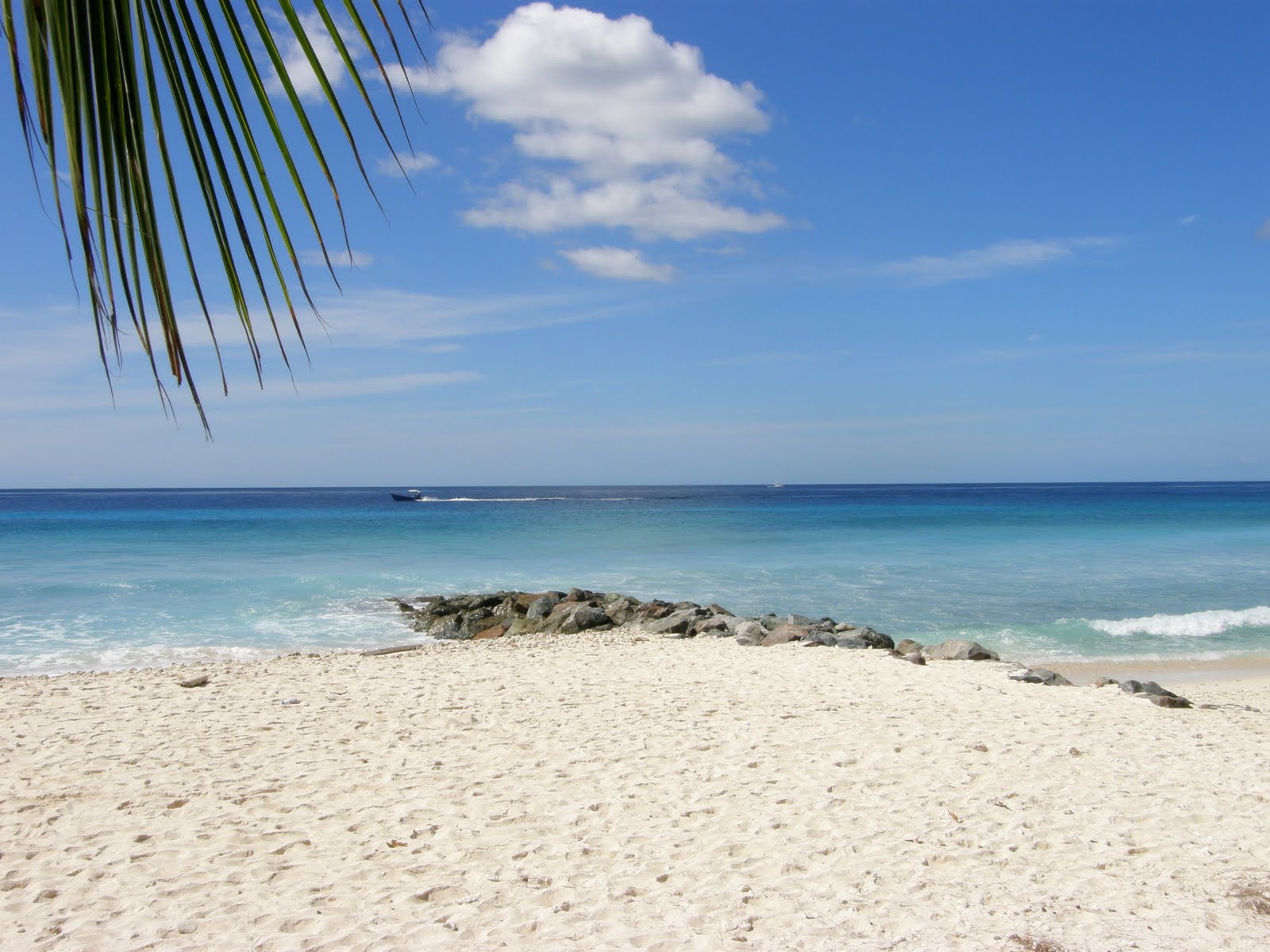
The south coast boardwalk starts at Rockley Beach and runs approximately 1.6  kilometer towards Bridgetown. The boardwalk starts just below Accra Beach Hotel, running parallel to Hastings Main Road, stopping just short of Coconut Court.

The boardwalk stretches along the beautiful turquoise sea with its vivid colours and the sparkling white sand. Along the boardwalk there are also several strategically placed view points and landscaped gardens, to let you enjoy the views of the South Coast and the incredible sunsets.
The boardwalk forms a wonderful link between hotels and apartments, local restaurants and bars so weather you feel like sitting by a bar and enjoying a cocktail as the sun sets or enjoying a Delicious Gelato ice cream on a hot summers day it is the place to be.

 The boardwalk opened in December 2008 and is enjoyed by tourists and locals, either walking to the beach or local businesses, or simply utilizing the new facility to exercise, meet up with friends, walk hand in hard with your sweetheart  and enjoy the views.


Provided with the compliments of your friends at Glory Tours. The #1 Provider of Sightseeing Tours in Barbados http://glorytours.org/

Barbados Military History Part 3: Admiral Nelson


In 1803 war broke out with the French and Spanish siding together against Britain. At this time Barbados was strategically used to retake the Islands held by the French. Admiral Nelson was also a key figure at this time he was well aware of his role as saviour of significant parts of the British empire. In 1805, he wrote to Lord Seaforth, the Governor of Barbados, that ‘Your Lordship may rely that everything in my power shall be done to preserve the colonies. Not surprisingly, then, Nelson monuments had sprouted in the empire
too. After a dramatic announcement of the Trafalgar victory , a subscription opened as soon as news of his death reached the island and raised £2,500 within a few weeks, ‘The Green’ in the centre of town was purchased for £1,050 and renamed Trafalgar Square. A bronze statue of Nelson in admiral’s
uniform was unveiled there soon afterwards.


Th victory won by Admiral Nelson removed any outside threat to Barbados and the islands for the next 175 years.

The Lord Horatio Nelson statue at this present time is some 196 years old, and once faced the west overlooking the country's main shopping area, the popular Broad Street, but was turned around to now face the cenotaph/obelisk in the east by the Barbados Labour Party in 1998.

The statue has caused much controversy over the last couple of years with heated debates being broadcast over the airwaves and the Internet. Many have been called for the statue to be removed from the chief town in such a central area, and from the Heroes Square on the basis of the following points:

1. His statue is the only one in our Heroes Square, and he is not a hero of the majority who are of African decent
2. He encouraged the enslavement of Africans, and therefore is an embarrassment to us.
3. The statue is more appropriate for a marine environment

The other side of the coin or the debate has been the following:
1. He is part of our history, and we would be destroying what is part of us.
2. Through his battle at Trafalgar we were saved from the "French" and therefore has the right to remain
3. As the statue of Horatio Nelson in Bridgetown, Barbados is older than its counterpart in Trafalgar Square, in Britain. It should be allowed to remain as a tourist attraction.

Some say the debate will continue but that Nelson will not be touched because he might have been a freemason and therefore is seen by some as a national hero. It is unknown if he is responsible for Masonry Flourishing in Barbados.


Provided with the compliments of your friends at Glory Tours. The #1 Provider of Sightseeing Tours in Barbados http://glorytours.org/

Wednesday, August 11, 2010

Barbados Military History Part 2: The Dutch Atack Barbados

In 1665 the English and Dutch were at war and Dutch Admiral Michiel de Ruyter was on a mission to destroy as much English shipping as he could in the Caribbean before returning to Holland.


On the 29th of April 1665 his fleet consisting of 12 battle ships arrived in Barbados. Early in the morning de Ruyter rounded the point and entered Carlisle Bay and he must have been ecstatic with the number of ships that lay in the bay for him to destroy. Barbados had however been pre warned about the impending attack and were well prepared. As de Ruyter entered the bay the forts and guns around the bay along with the guns from other armed merchant vessels opened fire. After an hour and a half his flagship was practically helpless and he decided to give up the attack. His fleet had been so badly damaged that he withdrew never to return again.


Provided with the compliments of your friends at Glory Tours. The #1 Provider of Sightseeing Tours in Barbados http://glorytours.org/

Tuesday, August 10, 2010

Barbados Military History Part 1: England Attacks Barbados

Barbados was claimed by England in 1625. What will come as a surprise to many of you is that though the Island remained under English rule the first attack made on her was by England itself in 1651.

In 1642 the civil war in England had begun  and lasted until 1651. The war was a series of armed conflicts and political machinations between Parliamentarians and Royalists. The civil wars set the supporters of King Charles I against the supporters of the Long Parliament ,and then later the Rump Parliament. The Civil War led to the trial and execution of Charles I, the exile of his son, Charles II, and replacement of English monarchy with first, the Commonwealth of England and then with a Protectorate under Oliver Cromwell's personal rule.

During the civil war misfortune was seen by both the Cavaliers and the Roundheads. Thus refugees from both sides began to come to Barbados to escape the strife and rebuild their fortunes. Most of them being royalist or cavaliers as they were called.

It is in this time Barbados began calling itself "Little England" The new settlers were determined to rebuild the fortunes they had lost in England and this brought Barbados increased activity and prosperity. They also brought with them the dissensions and difficulties they hoped to leave behind them in England.

In 1650, Francis, Lord Willoughby of Parnham arrived to claim the island in the name of Charles Stuart the pretender brother of the executed Charles the First. After initial protest, Barbados proclaimed Charles Stuart King of England. This was treason. But not all Barbadians were royalists; those who were not were told that, as roundheads, they should go back to England. The island was thus split, just as England was. At that time Barbados was also trading with the Dutch against the instructions of Cromwell

The Roundheads were being kicked out of their homes. Back in England, they would be political exiles and so Cromwell sent Sir George Ayscue  in 1651 to bring order and to quell the insurrection in Barbados.
News came to Barbados of the impending attack and the Governor placed the Island on a war footing. Forces of both horse and foot were quickly raised and the scene was set for the invasion of Barbados. Ayscuse arrived off Barbados on the 15th of October and seized 26 ships in Carlise bay. However for 6 months Ayscue was unable to land in Barbados as concentrated attacks on Speightstown were repelled by the small forts along the shore. The were however able to enforce a strict embargo on ships entering and leaving Barbados and thus dealing a sever blow to the islands economy.


Sir George Ayscue

Barbados was landed only after one of the governors most Senior commanders  Colonel Modiford made it clear that unless an agreement was made he would turn his regiment over to the roundhead . The Governor then sought a meeting with Sir George Ayscue who was also anxious to have the matter behind him as many of his men were suffering from scurvy a disease associated with the lack of fresh fruit and vegetables. The two men met in the Mermaid tavern in Oistins and signed what has become known as the "Charter of Barbados". Signed in 1652, the agreement gave Barbados rights and privileges unheard of in any other Island. In particular it guaranteed that Barbados could not be taxed without the consent of a Barbados General Assembly. It was under these terms Barbados surrendered to Ayscue.


A replica of the Mermaid Tavern at the National Armoury at St Ann's Fort


Provided with the compliments of your friends at Glory Tours. The #1 Provider of Sightseeing Tours in Barbados http://glorytours.org/